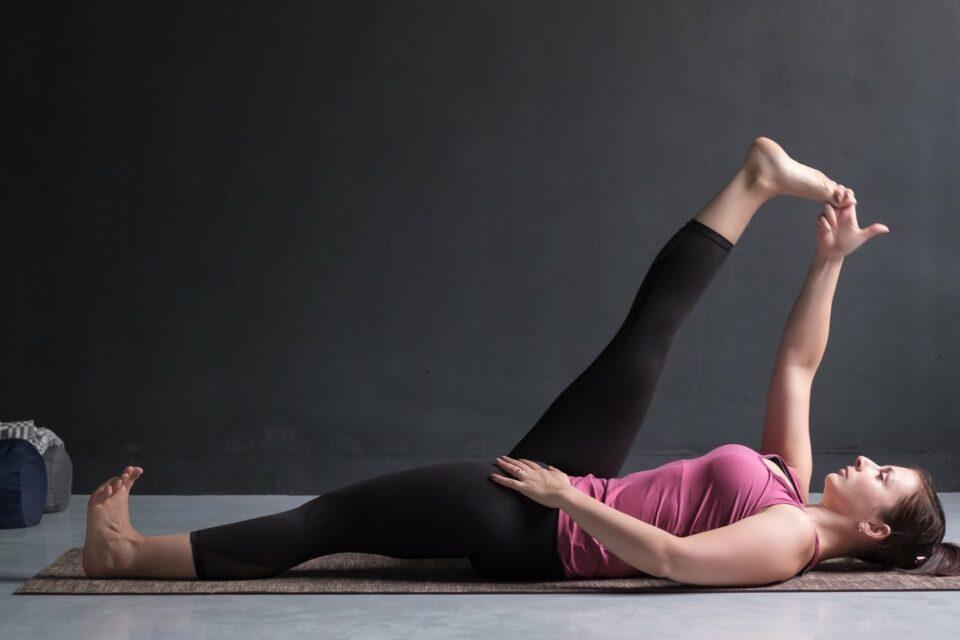
 Supta Padangusthasana is a reclining yoga posture performed while lying on the back and lifting one leg toward the ceiling. It stretches the hamstrings, improves hip mobility,and helps develop awareness of pelvic alignment without requiring a standing balance.
1. Benefits
- Stretches the hamstrings: Helps improve flexibility in the back of the thighs.
- Improves hip mobility: Gently mobilizes the hip joint and surrounding muscles.
- Supports pelvic awareness: Encourages the pelvis to remain stable while the leg moves.
- May ease muscular tightness: Can help relieve mild tension related to prolonged sitting.
- Improves body awareness: Develops control over leg movement while keeping the spine supported.
- Supports relaxation: The reclined position allows steady breathing without much balance demand.
2. How to Perform the Pose
- Lie on your back: Keep both legs extended and relax your shoulders.
- Bend one knee: Bring it toward your chest while keeping the other leg grounded.
- Lift the leg: Extend the raised leg toward the ceiling as comfortably as possible.
- Hold the foot or use a strap: Loop a yoga strap around the ball of the foot. Hold it with both hands or one hand, keeping your shoulders relaxed.
- Maintain alignment: Keep the back of your head and pelvis supported. Avoid forcing the raised leg straight.
- Breathe steadily: Hold for 5–8 comfortable breaths.
- Release slowly: Bend the knee, lower the leg, and repeat on the other side.
Duration: Begin with 20–30 seconds per side and gradually increase as comfortable.
3. Main Variations
A. Leg Raised Vertically
The foundational variation. Lift one leg toward the ceiling while keeping the opposite leg grounded. Focus on a gentle hamstring stretch without lifting the pelvis.
B. Leg Opened to the Side
Move the raised leg outward while keeping the opposite hip grounded. This variation targets the inner thighs and challenges pelvic stability.
C. Cross-Body Variation
Guide the raised leg gently across the body to introduce a rotational component. Keep the movement small and avoid forcing the lower back or hip.
4. Common Mistakes to Avoid
- Lifting the opposite hip off the floor.
- Locking the raised knee or forcing the leg straight.
- Holding the breath or tightening the shoulders.
- Pulling the foot aggressively toward the head.
- Allowing the grounded leg to bend when a comfortable extended position is possible.
5. Precautions and Modifications
- Tight hamstrings: Keep the raised knee slightly bent or use a yoga strap.
- Lower-back discomfort: Place a folded blanket under the head if helpful, and keep the grounded leg bent with the foot on the floor if extending it causes discomfort.
- Hip or hamstring injury: Avoid painful ranges and seek guidance from a qualified clinician or yoga therapist.
- Pregnancy: Adapt the position with guidance from a prenatal yoga professional, particularly as pregnancy progresses.
- Sciatica or radiating leg pain: Avoid pushing into nerve-like pulling, tingling, or numbness.
Stop if you experience sharp pain, numbness, or worsening symptoms.